The Ultimate Guide to Off Road Tilt Meter in the UK
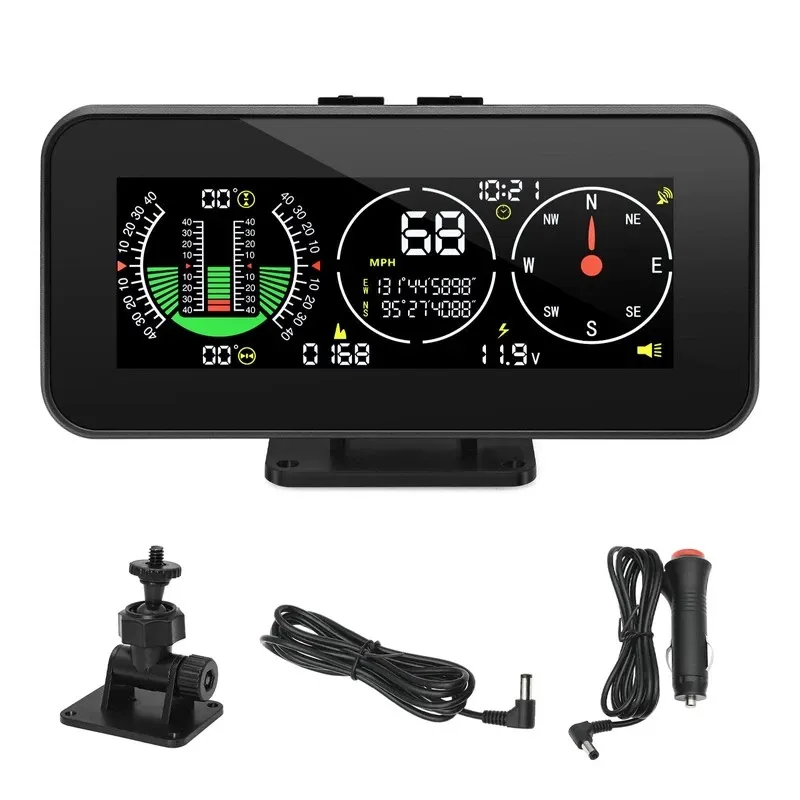
TL;DR: An off road tilt meter is a dashboard gauge that shows your vehicle’s pitch and roll angles, helping you judge side slopes, steep climbs and descents more safely. For UK green lanes, muddy byways and uneven rural tracks, a clear digital inclinometer can improve situational awareness, although it should always be used alongside proper off-road training and sensible driving.
An off road tilt meter helps drivers measure how much a 4x4, SUV or utility vehicle is leaning side to side or front to back on uneven ground. In simple terms, it gives live pitch and roll readings so you can assess slope angles more accurately than by eye alone, which is especially useful on UK green lanes, forestry tracks, farm roads and muddy byways.
Green lanes, forestry tracks, rutted farm access roads and steep descents all have one thing in common: once the ground stops being level, guesswork is no longer good enough. An off road tilt meter gives drivers a clear view of vehicle angle, helping them understand pitch and roll before a side slope or crest becomes a serious problem.
For UK 4x4 enthusiasts and SUV trail drivers, that matters more than many people realise. Our roads may be well mapped; however, off-road conditions are unpredictable. Mud hides cambers, water crossings mask depth and rutting can throw a vehicle off balance in seconds. A reliable inclinometer is not a gimmick on the dashboard; rather, it is a practical driving aid that supports better judgement when traction and stability are under pressure.
At CarInclino, the focus is simple: help drivers navigate safely with a pro GPS car inclinometer. Based on our testing of digital angle displays in mixed British conditions, the most useful units are the ones that remain easy to read on rough terrain and in poor weather. If you want to understand what an off road tilt meter does, how it works, what to look for in the UK market and how to use one properly, this guide covers it in detail.
Key Takeaways
- An off road tilt meter measures vehicle pitch and roll so drivers can assess slope angles more confidently.
- It is most useful for 4x4s, SUVs, overlanders, utility vehicles and anyone driving on uneven ground in the UK.
- Modern GPS-enabled inclinometer units can offer more stable readings than older analogue bubble gauges, especially when properly mounted and calibrated.
- A tilt meter does not replace driver training or common sense; instead, it adds objective information at moments when visual judgement can be misleading.
- Choosing the right unit means looking at accuracy, readability, mounting options, refresh rate, durability and ease of use in British driving conditions.
- For best results, use tilt readings alongside route planning, tyre choice, speed control and safe off-road technique.
What is an off road tilt meter?
An off road tilt meter is an instrument designed to show how far a vehicle is leaning or climbing relative to level ground. In practical terms, it helps the driver see two critical angles:
- Roll: side-to-side lean, such as when traversing a cambered track or side slope
- Pitch: front-to-back angle, such as when climbing a steep incline or descending sharply
You may also see these products described as inclinometers, slope meters or vehicle pitch and roll gauges. The core purpose is the same: give the driver live angle information that is difficult to judge accurately from the seat.
This matters because human perception is easily distorted off road. For example, a shallow-looking bank can be steeper than expected. Likewise, a side slope often feels less severe until wheel placement changes suddenly. On uneven terrain, the body rolls independently of what your eyes tell you about the horizon. Therefore, a dedicated off road tilt meter brings measurable data into that decision-making process.
Why do you need an off road tilt meter in the UK?
The UK has a very specific mix of off-road environments. Drivers are not usually tackling deserts or wide open rock trails; instead, they are dealing with wet clay tracks, exposed moorland routes, narrow byways, woodland inclines and fields with hidden drainage channels. These surfaces can turn from manageable to hazardous very quickly after rainfall.
That risk is not theoretical. According to Department for Transport reported road casualty statistics for Great Britain, there were thousands of casualties annually in collisions involving cars on non-built-up roads in recent reporting years. While those figures are not limited to recreational off-roading, they underline a wider truth: loss of control on uneven or higher-risk terrain remains a serious safety issue.
According to UK guidance from organisations such as Lantra and wider rural vehicle safety advice used across agricultural and land-based sectors, rollover awareness and terrain assessment are key parts of safe operation on uneven ground. An off road tilt meter cannot remove danger altogether; however, it can reduce reliance on instinct alone when approaching obstacles or awkward cambers.
For many drivers, especially those moving from standard road driving into green laning or rural trail work, that extra information creates calmer and more deliberate decisions. It also has value beyond leisure use. Estate vehicles, utility 4x4s and agricultural support vehicles often work on land where rollover awareness matters day after day. In those settings, knowing your vehicle angle is part of sensible operational awareness rather than enthusiast kit for its own sake.
How does an off road tilt meter work?
What is the difference between analogue and digital tilt meters?
The traditional style of tilt meter uses mechanical movement or fluid-based indication to show angle change. These units are simple and often inexpensive; however, they can be harder to read precisely when bouncing across rough ground. They may also react differently depending on vibration and mounting quality.
Modern digital units use internal sensors to calculate pitch and roll electronically. As a result, many provide clearer readouts and faster updates than older analogue formats. They also tend to suit modern interiors better if you want clean dashboard integration without sacrificing legibility.
How does GPS inclinometer technology help?
A pro GPS car inclinometer adds another layer of capability by combining sensor data with satellite positioning logic and digital processing. In practice, this can improve overall stability of displayed information while also supporting additional navigation-style features depending on model design.
The key benefit for many drivers is confidence in the reading itself. If you are inching onto a side slope at low speed or creeping down a sharp descent where wheel placement matters centimetre by centimetre, stable live feedback is far more useful than vague approximation.
What do pitch and roll readings mean?
Pitch angle tells you how steeply the nose of the vehicle points up or down compared with level ground. This becomes especially relevant during hill climbs and controlled descents where approach speed needs careful management.
Roll angle tells you how much the vehicle leans left or right. This is often the figure drivers watch most closely on side slopes because excessive body lean raises rollover risk.
If you want a deeper explanation of how these measurements relate to real buying decisions, see our companion guide: Vehicle Pitch And Roll Gauge Explained: A UK Buyer's Guide.
Why can visual judgement be unreliable off road?
A driver seated inside the cabin sees terrain through several distortions at once: bonnet height hides immediate surface changes; suspension travel changes body position; surrounding trees or banks alter your perception of horizon; wet mud makes wheel slip feel like extra angle even when lean has not changed much.
This is why experienced off-roaders still value instrumentation. Skill absolutely matters; nevertheless, objective reference data becomes invaluable when conditions are deceptive.
Ready to equip your 4x4 with {brand_name}?
Upgrade Your Dash — £53.85